
What Is a Treadmill Desk? What This Means
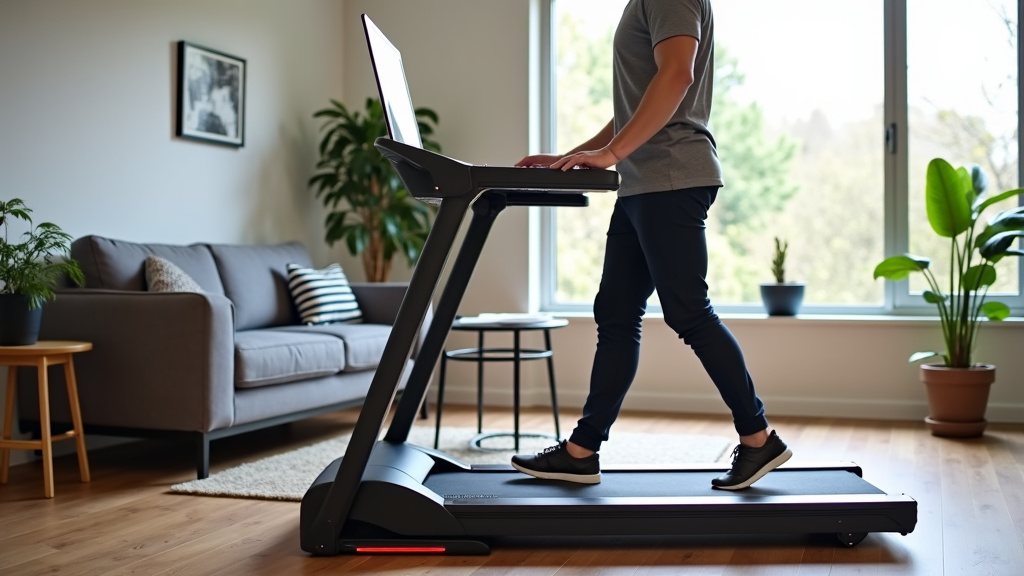
A treadmill desk is a standing desk paired with a treadmill, allowing you to walk slowly while you work. It is designed for low-intensity activity, not for exercise. You walk at a gentle pace while answering emails or typing, burning more calories than sitting still.
This type of active workstation is part of a broader trend to reduce the health risks of a sedentary job. We found that many users report feeling more alert and less stiff after switching to a treadmill desk. It’s a way to add movement to your day without stepping foot in a gym.
- A treadmill desk combines a standard desk with a slow-speed treadmill.
- You walk at a relaxed pace, typically between 1 and 3 mph, while working.
- It’s intended to combat the negative effects of sitting for long periods.
- Benefits can include increased energy, reduced back pain, and more daily steps.
- They aren’t for running; think casual walking during your work tasks.
Below, we break down everything you need to know about treadmill desks, from how they work to the real pros and cons we found in our research. Let’s walk through exactly what to consider if you’re thinking about getting one.
Understanding the Treadmill Desk Concept
A treadmill desk is a specially designed setup that lets you walk at a slow pace while performing your regular work tasks at a desk. It is fundamentally different from a traditional treadmill. You will not be sprinting or even jogging. The goal is to incorporate gentle, low-impact movement into your otherwise static workday.
Think of it as turning your desk into a very slow-moving path. This allows you to maintain focus on your computer, writing, or phone calls while your legs are in motion. The primary aim is to counteract the negative health impacts of sitting for eight hours or more. Research shows prolonged sitting is linked to various health concerns, even for those who exercise regularly (Cleveland Clinic).
How Does a Treadmill Desk Actually Function?
The system has two main parts: a treadmill base and a desk surface. The treadmill is built for extended, low-speed use. It is not the high-powered machine you find in a gym. The desk is placed over or in front of the treadmill, allowing you to walk while using a computer or writing.
The Components Working Together
You control the speed of the belt with a remote or console. Most users walk at a pace between one and two miles per hour. This is slower than a casual stroll but enough to keep you moving. You can increase the speed slightly as you get more comfortable.
Treadmill Belt and Motor
The motor in a treadmill desk is designed for long durations at low speeds. It is quieter and more efficient than a fitness treadmill motor. The belt itself is often narrower and shorter, focusing on a comfortable walking area rather than sprinting space.
The Desk Surface
Many models have an adjustable desk that sits over the treadmill. You can find fixed-height or electric sit-stand options. This allows you to switch between walking and standing easily. A stable desk surface is critical so your monitor, keyboard, and mouse do not wobble.
Core Benefits: What Research and Users Report
Switching to a treadmill desk is about changing your daily habits. The benefits are not about intense fitness but about consistent, light activity. We found several key advantages reported across studies and user experiences.
Increased Daily Movement
The most straightforward benefit is more steps. Many desk workers struggle to hit step goals. A treadmill desk makes it automatic. If you walk for just one hour each workday at 1.5 mph, that adds up to roughly 4,000 additional steps. Over a year, that is over a million extra steps without changing your schedule.
Potential for Improved Energy and Focus
Do you get that afternoon slump? Walking can help. Light physical activity boosts blood flow to the brain. Many users report feeling more alert and productive after a walking session. A small study suggested that walking during work meetings improved creative thinking (Stanford University). You might find your best ideas come when you are on the move.
Reduced Discomfort from Sitting
Sitting all day often leads to back pain, stiff shoulders, and tight hips. Walking engages your core and back muscles gently. This can relieve pressure on your spine. A review of workplace interventions found that standing and moving desks were associated with reductions in reported back pain (CDC).
The Honest Drawbacks and Challenges
It is not a perfect solution for everyone. There is a learning curve and some real challenges to consider. Being aware of these helps you set realistic expectations.
A Significant Learning Curve
You cannot simply hop on and type at full speed. Your coordination needs practice. Many people find they need to start with just 15-20 minutes a day and build up over weeks. Typing while walking is a skill. Be prepared to be slower at first.
Distraction and Productivity
For some tasks, you may need to be completely still. Highly detailed work, reading dense reports, or participating in a serious video call might be difficult. It can be distracting to your colleagues or to you. You may need to adjust when you walk based on your task list.
Noise and Space
Treadmill desks make some noise. While the motors are quiet, there is a soft whirring sound. This may not be ideal for a shared, quiet office. You also need floor space for the entire setup, which is larger than a standard desk.
Is It Really Effective? Looking at the Evidence
The science is promising but not absolute. The main takeaway from research is that treadmill desks are effective at reducing sitting time. They are a tool for behavior change. Their impact on long-term weight loss or disease prevention is less clear, primarily because they are used as part of a larger lifestyle.
Calorie Burn: A Modest but Real Increase
You burn more calories walking than sitting. A 155-pound person walking at 1.5 mph burns approximately 180 calories per hour. Sitting burns about 75 calories in the same time. That is a difference of over 100 calories each hour. This adds up to significant energy expenditure over a work year.
| Activity | Estimated Calorie Burn (1 hour, 155 lbs) |
|---|---|
| Sitting at a Desk | ~75 calories |
| Standing at a Desk | ~100 calories |
| Walking on a Treadmill Desk (1.5 mph) | ~180 calories |
Focus on Non-Exercise Activity
Experts increasingly talk about NEAT: Non-Exercise Activity Thermogenesis. This is all the movement you do that is not deliberate exercise. Increasing NEAT, like with a treadmill desk, is strongly linked to better metabolic health (Mayo Clinic). It is about moving more throughout the day, not just during a gym session.
Who Might Benefit Most from a Treadmill Desk?
This tool is not for every job or person. It works best for certain work styles and individuals. You should consider if you fit the profile.
Ideal Candidates
- Knowledge Workers: If you spend most of your day typing, reading, or on calls, you are a good candidate.
- People with Sedentary Jobs: If your job requires you to sit for long stretches, this directly addresses that problem.
- Those Who Dislike Traditional Exercise: If you find it hard to fit in gym time, this lets you multitask.
- People Seeking More Daily Steps: It is one of the easiest ways to increase your step count automatically.
Situations Where It May Not Be a Fit
- Jobs Requiring Precise Manual Dexterity: Tasks like detailed drawing, surgery, or complex equipment handling are not possible while walking.
- Very Fast-Paced, Reactive Work: If your job involves rapid, constant movement around an office, a stationary treadmill desk may not help.
- Those with Certain Physical Conditions: People with balance issues, severe joint pain, or uncontrolled high blood pressure should consult a doctor first.
Buying Guide: Key Features to Evaluate
If you decide to explore purchasing one, you have two main paths: buying an all-in-one unit or creating a DIY setup. Here is what to look for.
All-in-One vs. DIY Setup
An all-in-one system is designed as a single unit. It is typically stable and easy to set up but often more expensive. A DIY setup involves placing your existing standing desk on top of a small treadmill. This can be cheaper but requires ensuring the desk fits securely and safely over the treadmill frame.
Treadmill Specifications
- Speed Range: You need a low top speed, around 2-4 mph is perfect. A high top speed is unnecessary.
- Motor Power: For walking, a 1.5 to 2.5 CHP motor is sufficient. Higher CHP means a quieter, more durable motor for long walks.
- Belt Size: Look for a belt at least 20 inches wide and 48 inches long. This gives you plenty of room to walk comfortably.
- Noise Level: Check the decibel rating. You want it to be quieter than a normal conversation.
Desk and Ergonomics
Your desk must be at the right height. When standing, your elbows should be at a 90-degree angle, and your wrists straight on the keyboard. Adjustable height is ideal. Also, ensure your monitor is at eye level to avoid neck strain.
Tips for Getting Started and Staying Comfortable
Success is about starting slow and building a habit. Do not expect to walk all day from the beginning.
The “Start Slow” Checklist
- Week 1-2: Walk for 15-30 minutes once per day during a low-focus task like reading emails.
- Week 3-4: Increase to 45-60 minute sessions. Try typing while walking.
- Find Your Pace: Experiment between 1.0 and 2.0 mph to find your comfortable walking speed for work.
- Use the “Stop” Button: For important calls or concentration-heavy work, stop the treadmill. There is no rule you must walk constantly.
- Wear Proper Shoes: Comfortable, supportive walking shoes are a must. Avoid high heels or restrictive footwear.
- Hydrate: You will sweat more than when sitting. Keep water handy.
Making It a Sustainable Habit
Consistency is more important than duration. We found that users who integrated walking into their daily routine for specific tasks were more successful. For example, they might walk during all morning emails but sit in the afternoon for reports. Pair it with a habit you already have, like your morning coffee or daily stand-up meeting.
Final Thought on What It Means for Your Workday
A treadmill desk represents a shift in thinking. It moves the concept of a “workstation” from a static chair to a dynamic space. It means you no longer have to choose between productivity and movement. You are not exercising; you are simply integrating a healthier amount of motion into the hours you already spend working. For many, this small change makes a big difference in how they feel by the end of the day.
Conclusion
A treadmill desk is a practical tool for adding low-intensity movement to your workday. It is not a fitness machine but a way to reduce sitting and increase your daily steps. The benefits we found include more energy and less stiffness, but it requires a learning curve and careful task management. You should consider if your work style is compatible with walking while typing. The key is to start slow, build a habit, and listen to your body. If you are ready to test the concept, begin with a 15-minute trial during a low-focus task to see how it feels.
Frequently Asked Questions
Can I use a treadmill desk for a full eight-hour workday?
Most users do not walk for the entire day. It is more effective to alternate between walking and sitting. You can start with 1-2 hours of walking per day and adjust based on your comfort and task needs. Your body needs variety.
Is a treadmill desk good for losing weight?
It can contribute to weight management by increasing your daily calorie burn. We found that walking at a slow pace burns significantly more calories than sitting. However, it should be part of a broader healthy lifestyle, not the only solution.
Do I need to buy a special treadmill for a treadmill desk?
You need a treadmill designed for low-speed, long-duration use. A standard gym treadmill may work but is often louder and less efficient. Look for models with a quiet motor, low top speed, and a belt at least 48 inches long.
Can I use my existing standing desk with a treadmill?
Yes, a DIY setup is common. You place your standing desk over or in front of a small treadmill. Ensure the desk is stable and at the correct height. This can be a cost-effective option if you already own a standing desk.
Will a treadmill desk be too noisy for a home office?
Most treadmill desks are designed to be quiet, with a soft whirring sound. The noise level is typically lower than a normal conversation. Check the decibel rating before buying, especially if you take many phone calls.