How Does a Desk Riser Mechanism Work?
A desk riser mechanism lifts a platform and holds it at a selected height. Depending on the design, you raise it with a hand crank, a release lever and spring assist, or an electric control.
On this page (7 sections)
A desk riser mechanism lifts a platform and holds it at a chosen height. Depending on its design, you raise it with a hand crank, a release control and spring assistance, or an electric button.
The main difference is how the lift starts and how you control the height. Knowing that helps you choose between a converter that sits on an existing desk and a frame or full desk that raises its own work surface.
What does a desk riser mechanism do?
A desk riser mechanism moves a work surface between sitting and standing heights. Its support system carries the platform and the items on it while controls help you set or change its position.
A converter usually sits on top of an existing desk and raises a smaller platform for your keyboard and monitor. A height-adjustable frame raises a tabletop, while an electric desk includes a motorized lift.
The term “desk riser” can refer to more than one kind of setup. For a basic overview of the options, see [What Is a Desk Riser?
Facts Worth Knowing](/what-is-a-desk-riser/).
How does a manual desk riser lift?
A manual lift uses your hand to operate a control, such as a crank or lever. The mechanism transfers that input to the legs or platform, raising the work surface without a motor.
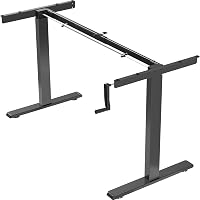
With a hand-crank frame, turning the crank moves telescopic legs to change the height. The VIVO Manual Height Adjustable Standing Desk Frame uses a hand crank and two-piece telescopic legs.
The frame supports up to 132 lb and is designed for tabletops of specified sizes.
A manual converter may use a different lift design. The VIVO Manual Height Adjustable Standing Desk Riser uses a touch height-locking mechanism with a pneumatic spring lift, and its keyboard tray rises with the top surface.
Manual controls don't require a motor to move the platform, but the effort and movement depend on the specific design and load. For more examples of crank-operated desks, see our guide to the best standing desk manual crank options.
How does a pneumatic desk riser mechanism work?
A pneumatic riser uses spring assistance to help raise its platform when you release the height control. You guide the surface to the desired position, then the mechanism holds it there.
The VIVO riser has a 26 lb lift assist and a stated height range of 4.9 to 19.7 in. Its 31.5 x 15.8 in top surface and synchronized keyboard tray make it a converter for a smaller work area, rather than a full tabletop frame.
“Pneumatic” describes the spring-assisted lift, not an electric motor. Compare platform size and load capacity with your monitor and keyboard setup before choosing one.
If you want to compare spring-assisted choices, see the best pneumatic standing desks. Check the height range and control style for the specific model, since the term covers different desk designs.
How does an electric height-adjustable desk work?
An electric desk uses a motor to move its lifting columns when you press a control. For model-specific steps, see Luxurge memory preset instructions.
Depending on the controls, you may be able to save preferred heights and return to them with a button press.
The ErGear 48 X 24 Inch Height Adjustable desk is an electric model with a motor and 4 memory presets. For desks with two lifting motors, compare dual-motor standing desks.
Its stated height range is 28.35 to 46.46 in, so compare that range with your seated and standing positions.
A full electric desk is different from a converter: it raises the desk itself, not just a platform placed on top. For a converter, consider whether its controls and movement suit your work surface and available space.
Does the lifting path matter?
Yes, the platform's travel path affects how much space it needs. A riser that moves straight up may need less clearance behind it than one whose platform travels forward as it rises.
Check where your monitor, wall, shelves, and cables sit throughout the full movement range. If the platform carries a monitor, make sure it can rise without hitting an overhead shelf or pulling on connected cables.
Also check whether the keyboard tray moves with the monitor surface. A synchronized tray changes the position of both together, while a separate surface may require you to adjust your keyboard position.
What should you check before choosing a mechanism?
Check height range, load capacity, surface dimensions, and controls against your setup. Include the combined weight of the monitor, keyboard, laptop, and other items placed on the moving surface.
For a converter, measure the existing desk and the space available when the platform is raised. For a frame, check the tabletop dimensions it supports and whether your chosen top needs drilling.
Think about how often you'll change height. A crank needs you to operate it by hand, a spring-assisted riser needs you to release and guide the platform, and an electric desk moves when you use its controls.
Finally, consider what stays on the surface during adjustment. Loose items can shift, and cables need enough slack to move without snagging.
Which desk riser mechanism should you choose?
Choose a manual crank if you want a frame that raises a compatible tabletop by hand. Choose a pneumatic converter if you want a spring-assisted platform that sits on an existing desk, and an electric desk if you want a motor and button controls for a full desk.
The VIVO frame suits readers comparing a hand-crank frame with telescopic legs. The VIVO riser suits a smaller converter setup with a moving keyboard tray, while the ErGear desk offers electric movement and memory presets.
Measure your work area and compare the mechanism's movement, height range, and supported load with your equipment. Those details will help you narrow down which kind of lift fits your desk and routine.
Frequently asked questions
How does a desk riser mechanism work?
A desk riser mechanism uses a lifting system to raise its work surface and hold it at a chosen height. A manual riser may use a spring-assisted lift and locking control, while a desk frame can use a hand crank to move telescopic legs.
Electric desks use a motor and controls.
What is the difference between a pneumatic and electric desk riser?
A pneumatic riser uses spring assistance to help you lift the platform after releasing its control. An electric desk uses a motor that moves the work surface when you press a button.
Both reduce the need to lift the full work surface by hand, but their controls and power needs differ.
Does a desk riser move straight up?
Some risers are designed to lift straight up, while others may move the keyboard and monitor surface along a different path. Check how the platform travels and measure the space behind and around it, especially if it sits close to a wall or monitor arm.
What should I check before choosing a desk riser?
Check the riser's height range, supported load, surface size, movement path, and control type. Include the weight of your monitors and other items when comparing load limits.
Also confirm that the raised platform leaves enough room for your keyboard, chair, and monitor.