How to Choose Standing Desk Chair Height
The right standing desk chair height lets your feet rest on a ring or floor while your elbows stay near desk height. Measure the desk, chair seat range and foot support together before choosing raised seating.
On this page (10 sections)
- How do you measure standing desk chair height?
- What makes a chair suitable for a raised desk?
- Should your feet touch the floor or a foot ring?
- How much desk clearance does a tall chair need?
- Which standing desk chair height suits different work styles?
- How do you choose between a tall chair and a stool?
- Do wheels help with a standing desk chair?
- Does back support matter at standing desk height?
- How should you set up and adjust the chair?
- What is the final standing desk chair height rule?
The right standing desk chair height keeps your elbows close to desk level while your feet stay supported. For most raised work surfaces, start by measuring the desk, then choose a chair or stool whose seat range reaches that height without forcing your shoulders up.
This matters more than the name of the chair. A tall chair can still be too low for a high desk, and a standard chair can work well when the desk lowers for seated work.
A standing desk does not automatically need a tall chair. If you lower the desk for seated work, a regular office chair may be enough.
That choice suits people who sit for long stretches and only stand for part of the day. It also suits smaller rooms where a raised chair would crowd the desk or block a walkway.
If the surface stays high, look at drafting chairs, standing desk stools or other raised seating with a foot ring. These options can suit a fixed work height, a counter, or a desk that you rarely lower.
Check more than seat height when you compare them. You also need stable foot support, so your legs do not dangle when the seat is raised.
Also check desk clearance and your main posture. Your knees, arms and chair back should still fit under the desk without pushing you into a reach.
Think about how you change position through the day. The right setup should let you sit, stand and return to the desk without a long reset.
Measure first, then match the chair to the desk you actually use. That simple order saves more guesswork than shopping by height labels alone.
How do you measure standing desk chair height?
Measure the distance from the floor to the desk surface, then compare it with the chair's seat-height range. The seat should place your elbows near the work surface while your feet rest on the floor or a stable support.
Use these measurements before you shop:
- Measure the desk surface from the floor.
- Measure the chair cushion from the floor at its lowest and highest settings.
- Check the distance between the seat and the underside of the desk.
- Measure where your feet will rest when the seat is raised.
- Check whether armrests can slide under the desk.
- Leave room to move your knees and change position.
Your ideal height depends on your body and task. A keyboard and mouse usually need a different arm position from handwriting, drawing or a counter-height activity.
Sit with your shoulders relaxed and your elbows close to your sides. If the desk feels too low, you may lean forward.
If it feels too high, you may raise your shoulders or bend your wrists.
A height-adjustable desk gives you more flexibility because you can lower the work surface for a standard chair. Our How to Choose a Standing Desk: A Simple Guide explains how desk range, controls and work style affect that decision.
What makes a chair suitable for a raised desk?
A suitable chair combines enough seat height with stable foot support and usable desk clearance. Seat height alone is not enough if your feet dangle or the chair cannot fit under the work surface.
Look for these features:
- A seat-height range that reaches your desk comfortably.
- A foot ring or another dependable place to rest your feet.
- Enough knee clearance below the desk.
- A cushion that supports short or extended seated sessions.
- A backrest if you need more upper-body support.
- A base that stays stable when you shift position.
- Casters only when you want to move and your floor supports them.
A raised chair often changes how you sit. You may perch for a short task, rest your feet on a ring and stand again.
That makes easy height adjustment and quick foot repositioning more useful than a fixed seat that works in only one posture.
If you want a standard seated setup, begin with an ergonomic office chair guide. If your desk stays tall, compare features in our best standing desk chair guide.
Should your feet touch the floor or a foot ring?
Your feet should have a stable support point, but they do not always need to reach the floor. When the seat is raised for a standing-height desk, a foot ring can support your feet and make it easier to change position.
A foot ring works best when it is easy to reach without stretching your toes. It should feel solid when you move one foot or shift your weight.
Avoid treating a narrow edge as your only support if it makes your legs feel cramped.
A separate footrest can work with a chair that has no ring. Place it so your feet can move naturally rather than locking your ankles in one spot.
How high should the foot ring be?
Set the foot ring where your feet can rest without lifting your knees sharply. Your thighs should not be pressed hard against the seat, and your legs should have room to change position.
A ring that sits too low may leave your legs extended. A ring that sits too high may crowd your knees or reduce clearance below the desk.
Adjust the seat and ring together whenever both are movable.
If foot support is your main concern, compare our best adjustable height stool for standing desk guide. Stools can be a good fit when you want a perch, but they may offer less back support than a chair.
How much desk clearance does a tall chair need?
Leave enough space between the chair seat, armrests and desk underside for your knees and arms. A chair can reach the correct desk height and still fail if its arms or back hit the desk.
Check the desk's underside, frame, drawers and control panel. A frame crossbar may reduce legroom even when the desktop is high enough.
Measure the narrowest clearance, not just the open space at the front edge.
If the chair has flip-up arms, raise them when you need to move closer to the desk. Armless seating gives you more approach space, but it provides less arm support during seated work.
Your desk frame also affects clearance. Read How to Choose a Standing Desk Frame: Quick Fixes before pairing a chair with a custom desktop or a replacement base.
Which standing desk chair height suits different work styles?
Choose a chair based on how often you sit, stand and move between tasks. A person who sits for several hours needs different support from someone who perches for short breaks.
For frequent sitting and desk work
Choose a chair with a backrest, adjustable seat height and enough cushion support for your work sessions. You should be able to sit close enough to the desk without leaning forward.
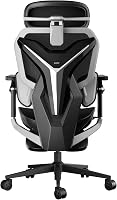
This chair is better suited to a desk that lowers into a regular seated range than to a permanently high standing desk. Its 18 in depth and 18 in width give you a compact footprint to compare with your available space.
The chair has a dark black mesh back, alloy steel frame and sponge fill. BestOffice says the chair supports up to 250 lb and includes hardware and instructions for assembly.
For a raised desk with a foot ring
Choose a drafting chair when your desk remains above standard sitting height. The key measurements are the raised seat range, the foot ring position and the clearance beneath your desk.
The chair has a breathable mesh back, a 3 in thick seat cushion and foam fill. Its 360-degree swivel, rolling casters and five-claw base make it easier to turn and reposition, while the foot ring gives your feet a support point when the chair is raised.
The flip-up armrests can help you move closer to the desk or save space when the chair is not in use. Primy describes the lumbar support as adjustable and includes a cushion with the chair.
For an armless perch at counter height
Choose an armless drafting chair when you want a clear approach to the desk and do not need armrests. A broad height range matters because counter-height and standing-height surfaces can differ widely.
Its cushion is 16.5 in wide and 16.3 in front-to-back, with a square shape and sponge padding. The black faux leather upholstery and solid back create a different feel from the mesh options above.
The chair is armless, has a metal frame and a straight-leg base. Misolant describes the chair as having a BIFMA-tested design and an SGS-certified gas rod, and its manual estimates about 25 minutes for installation.
How do you choose between a tall chair and a stool?
Choose a tall chair when you want a backrest and plan to sit for longer periods. Choose a stool when you prefer a compact perch, easier movement and less structure around your legs.
A chair with a backrest can help you change position without leaving the desk. A stool may make it simpler to alternate between sitting and standing, but you need to decide whether the missing back support suits your work pattern.
Check the foot support on either style. A tall seat without a ring may leave your feet unsupported, while a stool with a fixed ring may not suit your leg length.
Seat width and depth matter too. A smaller cushion can leave more clearance around the desk, but a larger cushion may feel less restrictive.
Measure the chair against the desk rather than judging height by the product name alone.
Do wheels help with a standing desk chair?
Wheels help when you move between a desk, another workstation and nearby storage. They are most useful on a chair that you can control easily at its raised height.
Rolling casters can make it easier to turn and pull away from the desk. They can also let the chair move when you shift your weight, especially on smooth floors.
That movement can be handy at a shared desk. You can roll back, stand, and move to another task without lifting the chair.
It can also be a problem when you want a stable perch. A chair that drifts while you type may force you to keep bracing yourself instead of relaxing.
Check that the base feels stable and that the casters suit your flooring. A wide base usually gives more control when you lean, turn or reach for nearby items.
Hard floors often let casters roll with little effort. Carpet can slow them down, and a raised seat may feel less steady when the chair starts to move.
A fixed or less mobile base may be better if you want the chair to stay in one place. This can suit a single desk, a narrow nook, or a room where you do not need to travel far.
If you do want mobility, try the chair on your floor before you commit to a setup. Push it back, turn it, and pull it close again to see how it behaves at your working height.
For a mobile setup, see our best standing desk chair with wheels guide. It can help you weigh travel and control against foot support and desk clearance.
Also keep cables clear of the casters. A mobile chair is only helpful when it can move without catching on cords, rugs or desk frames.
Does back support matter at standing desk height?
Back support matters when you sit often, but it should not force you away from the desk. A backrest is useful only when the chair can still fit under the desk with enough room for your knees and arms.
Look for a backrest that supports your preferred seated position. A curved back, lumbar support and suitable cushion height may make longer sitting more manageable, but no chair makes standing breaks unnecessary.
An armless chair gives you more space to approach the desk. An arm-supported chair may suit longer seated tasks if the arms clear the desktop and let your shoulders relax.
Compare chair shapes in our best standing desk chair with back support guide. If you are choosing upholstery as well as height, our mesh vs leather office chair comparison covers the main material trade-offs.
How should you set up and adjust the chair?
Start with the desk at the height you use for typing, then adjust the chair until your elbows sit near the work surface. Use the foot ring or footrest before raising the chair further.
Follow this setup sequence:
- Place the chair on the floor where you will work.
- Set the desk at your normal keyboard height.
- Adjust the seat until your shoulders stay relaxed.
- Place both feet on the floor, ring or footrest.
- Check that your knees and thighs have room.
- Move the keyboard and mouse close enough to avoid reaching.
- Stand up and confirm the chair can move away safely.
Switch between sitting and standing instead of forcing one position all day. A standing desk chair is a support for seated periods, not a reason to keep the desk or chair fixed in one posture.
Keep the foot ring, casters and adjustment controls clear of cables. Tighten hardware according to the assembly instructions, and recheck the chair if it begins to wobble.
What is the final standing desk chair height rule?
Pick the chair by the complete fit: seat range, foot support, desk clearance and your main work posture. Choose BestOffice for a standard-height desk and frequent seated work, Primy for a raised desk with a foot ring and flip-up arms, or Misolant for a taller armless setup with a 23.5 to 31.9 in cushion range.
This rule keeps you from buying by label alone. Drafting, office and stool names describe a style, but your desk and body decide whether that style fits.
Use BestOffice when your desk lowers into a normal seated range. Its 17.1 to 20.3 in seat height suits that setup, and the mesh back and lumbar support suit longer seated sessions.
Use Primy when the desk stays raised and your feet need a ring. Its flip-up arms can help you move closer to the desk, while the curved back and lumbar support suit a chair you use for extended sitting.
Use Misolant when you want an armless perch for a taller surface. The wider cushion range gives more reach, and the lack of arms leaves more open space at the desk.
Measure before you buy, then check the chair's exact dimensions against the desk underside and your available floor space. Look at width and depth as well as height, since a large chair can crowd a small work area.
Set up the seat, ring and desk together after it arrives. Raise the chair until your shoulders relax, then set the foot support so your legs can move without pressure at the back of the thighs.
Keep the finish and controls in mind during daily use. Wipe mesh, faux leather and cushion surfaces as directed, and check casters and hardware now and then so the chair stays smooth and steady.
If one part of the fit fails, change that part before you accept the setup. A footrest, a lower desk setting or a different chair may solve the issue more cheaply than forcing the first choice to work.
The best standing desk chair height is the one that lets you change position without losing stable support. When seat, feet, clearance and posture line up, the chair fades into the work and you can focus on the task.
Frequently asked questions
What is the best standing desk chair height?
The best standing desk chair height is the one that lets your feet rest on a foot ring or the floor while your elbows sit comfortably near the desk surface. Measure your desk height, seat height range and foot support together because a tall chair that fits one desk may be too low or high for another.
How high should a chair be for a standing desk?
Set the chair high enough for your forearms to reach the desk without lifting your shoulders, but keep your feet supported. A drafting chair or tall stool often works better than a standard office chair when the desk stays raised, while a height-adjustable desk gives you more seating options.
Do I need a footrest for a standing desk chair?
You need reliable foot support when your feet cannot rest flat on the floor. A built-in foot ring, adjustable footrest or separate footrest can reduce dangling legs and give you a stable position while seated.
Make sure the support is wide enough for easy foot movement.
Can a regular office chair work with a standing desk?
A regular office chair can work only when its seat rises high enough for the desk and still lets you sit with supported feet. Many standard chairs top out below raised desk height, so check the seat range before buying.
A tall drafting chair may provide more useful adjustment.
How do I measure standing desk chair height?
Measure from the floor to the top of the chair cushion at its lowest and highest settings. Then measure the desk surface from the floor.
Compare those numbers with your preferred elbow position and foot support, leaving enough clearance for your knees and any armrests.