How to Pick the Right Standing Desk Size
Picking the right standing desk size means making sure your monitors and keyboard fit comfortably. You also need enough space for your daily essentials. Measure your current desk and consider how much room you actually use. This ensures your new standing desk works well for your needs.
A standing desk should support your work style without feeling cramped. Think about what you keep on your desk: extra monitors, notebooks, or even a coffee mug. We found that desks that are too small can feel cluttered quickly. A desk that’s too large might not fit your room. Finding the perfect balance is key for comfort and productivity.
- Measure your current setup first.
- Think about how many monitors you use.
- Consider space for accessories and personal items.
- Ensure the desk fits your room dimensions.
- A good size boosts comfort and focus.
Let’s walk through exactly how to pick the best standing desk size for your space and workflow.
“`htmlFinding the Right Standing Desk Dimensions
Choosing the correct standing desk size is about balancing your workspace needs with your room’s available space. You want enough surface area for your essential work tools without feeling cramped. It’s also important that the desk doesn’t overwhelm your office or home environment. We’ve found that a thoughtful approach to measurement and planning makes a big difference. Choosing the correct standing desk size is about balancing your workspace needs with your room’s available space, and understanding what a sit-stand workstation entails.
Measure Your Current Work Area First
Before you even start looking at standing desks, grab a tape measure. Measure the space where your current desk sits. Note down the width and depth. This gives you a hard limit on how big your new standing desk can be. Many people forget this step and end up with a desk that simply won’t fit.
Think about the layout of your room. Do you need space to open drawers or walk around the desk? Make sure to account for the desk’s footprint plus any necessary clearance. We found that adding a few extra inches for maneuverability is always a good idea.
Consider Your Monitor Setup
Your monitors are likely the largest items on your desk. How many do you use? Are they small laptop screens or large external displays? A single 27-inch monitor needs less space than two 32-inch monitors side-by-side. You need enough width to comfortably position them without feeling like they’re crammed together.
Single Monitor Needs
If you only use one monitor, you have more flexibility. You can likely fit on a narrower desk. However, consider the monitor’s stand. Some stands take up a good amount of depth. You’ll want to ensure there’s still room for your keyboard and mouse in front of it. We found that a depth of at least 24 inches is usually sufficient.
Dual Monitor Needs
Using two monitors significantly increases your width requirement. Measure the total width of your monitors placed side-by-side, including any small gap between them. Add space for monitor arms if you use them, as they can extend outwards. Many users find that a minimum width of 48 inches is necessary for dual setups.
Triple Monitor and Ultrawide Setups
If you have three monitors or an ultrawide display, you’ll need a wider desk. These setups demand substantial horizontal space. Measure your entire monitor array carefully. We found that desks 60 inches wide or even 72 inches wide are often best for these more expansive configurations. Don’t forget you’ll still need room for your keyboard and other items.
Keyboard, Mouse, and Typing Space
Your keyboard and mouse need comfortable placement. You shouldn’t have to hunch or stretch awkwardly. There should be enough depth for your keyboard and mouse with enough space behind them for your arms to rest comfortably. This is often called “typing space.”
We found that a keyboard tray isn’t always necessary. Most standing desks offer enough depth for a standard keyboard and mouse. Ensure there’s clear space for your arms and wrists. Proper ergonomics mean you can type without feeling constricted. This space is essential for preventing strain during long work sessions (CDC).
What Else Lives on Your Desk?
Think about all the other items you keep within arm’s reach. This includes things like:
- Notebooks and pens
- A coffee mug or water bottle
- Your phone
- Desk organizers
- External hard drives
- Webcams
These items take up valuable surface area. If you like to keep a lot of things on your desk, you’ll need a larger desktop. Measure the footprint of these items too. We found that adding up the space for these “daily essentials” can significantly increase your desk size needs.
Desk Depth vs. Width: What’s More Important?
While both width and depth are important, they serve different primary functions. Width is mostly about accommodating monitors side-by-side and providing linear workspace. Depth is about how far the desk extends from front to back.
Depth ensures you have comfortable typing space and enough room to place monitors at an ergonomic distance from your eyes. A common mistake is choosing a desk that’s too shallow. This can make your setup feel cramped and lead to poor posture. We found that a depth of 24-30 inches is generally suitable for most users.
Width is more about fitting multiple monitors and spreading out your accessories. If you only have one monitor and minimal clutter, a narrower desk might work. However, if you multitask heavily or have a spacious setup, you’ll prioritize width. Many standing desks come in standard widths like 48, 60, and 72 inches.
Understanding Common Standing Desk Sizes
Standing desks come in a variety of standard sizes. Knowing these can help you visualize what might fit your space and needs.
| Width | Typical Use Cases |
|---|---|
| 40-47 inches | Single monitor, minimal accessories. Good for small spaces. |
| 48-55 inches | Dual monitors (smaller), single large monitor with space, moderate accessories. Most popular size. |
| 60 inches | Dual monitors (standard to large), triple monitors (smaller), ample accessory space. Versatile. |
| 72 inches+ | Multiple large monitors, extensive accessory needs, home office setups. Maximum space. |
Remember to also consider the depth. Many desks come in 24-inch or 30-inch depths within these width categories. We found that a 30-inch depth offers a more generous workspace for most people.
Don’t Forget Your Room’s Layout
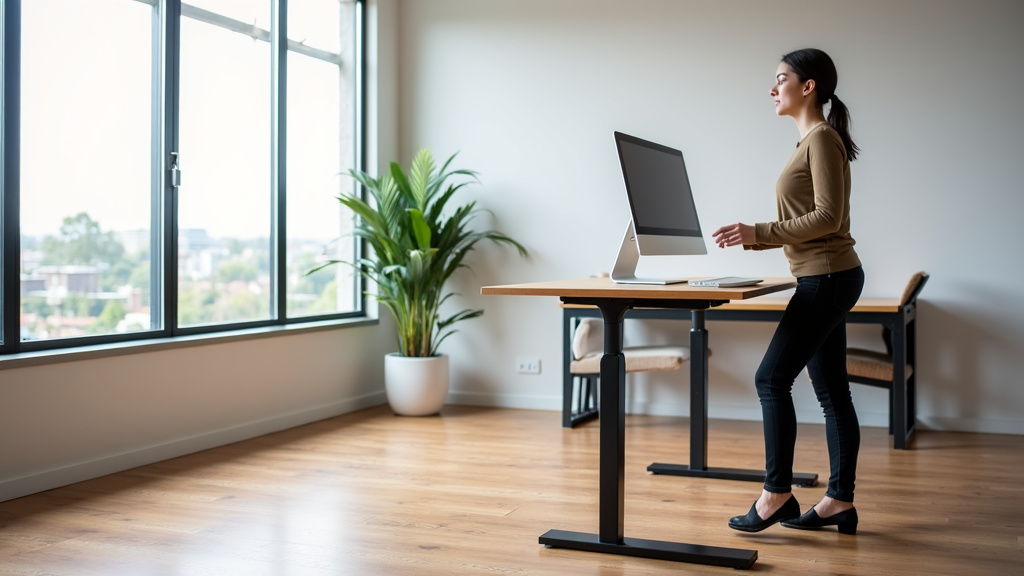
Your standing desk needs to fit not just your equipment but also your room. Imagine sitting and standing at the desk. Can you comfortably move around it? Is there enough space for a chair to tuck under when not in use?
Measure the clearance around the intended desk location. Consider doorways, other furniture, and walking paths. A desk that’s too wide or deep can make a room feel cluttered and difficult to navigate. We found that many people underestimate the space required for a chair to slide in and out smoothly.
A Quick Checklist for Your Perfect Size
Here’s a simple way to review your needs:
- Measure your current desk space. Know your maximum dimensions.
- Count your monitors. Measure their total width.
- List your essential accessories. Estimate their footprint.
- Decide on typing space. How much room do your arms need?
- Check your room dimensions. Ensure easy movement.
- Visualize the final setup. Imagine working at the desk.
Taking these steps helps ensure your new standing desk supports your workflow without creating new problems. We found that a little planning upfront saves a lot of hassle later.
“`
Conclusion
You’ve learned how to choose the right standing desk size by measuring your space and considering your gear. Remember to check your monitor setup, keyboard needs, and any other essentials you keep handy. Don’t forget to account for room layout and comfortable movement. By following these steps, you’re well on your way to finding a standing desk that boosts your comfort and productivity. Your next step is to grab that tape measure and start planning your ideal workspace!
Frequently Asked Questions
How much space do I need for a single monitor standing desk?
For a single monitor, you generally need less width. A desk around 40-47 inches wide is often sufficient. Ensure it’s deep enough, at least 24 inches, for comfortable typing and monitor placement.
What’s the minimum depth for a standing desk?
A desk depth of 24 inches is a common minimum, but 30 inches offers more comfortable typing space and room for accessories. We found that deeper desks prevent a cramped feeling.
Do I need a standing desk calculator to figure out the size?
No, a calculator isn’t strictly necessary. Simple measurements with a tape measure and careful consideration of your items are usually enough. You’re just measuring your existing setup and room.
Will a wider standing desk always be better?
Not necessarily. While a wider desk accommodates more monitors and items, it also needs to fit your room without making it feel cluttered. Balance your needs with your available space.
How do I measure for clearance around the standing desk?
Measure the area where the desk will go, then add space for opening drawers, sliding a chair in and out, and walking around. Allow at least a couple of feet of clearance on sides and in front.