How to Choose a Saddle Stool Without Wheels
Choose a saddle stool without wheels by matching its fixed base, seat height and footprint to your workspace. A stable stationary base suits focused work where you want support without rolling.
On this page (10 sections)
- How to Choose a Saddle Stool Without Wheels
- What should you check first in a saddle stool without wheels?
- How do you choose the right saddle stool height?
- Why does a fixed base matter?
- What seat shape works best for a stationary saddle stool?
- How should a saddle stool support movement?
- How do you compare a saddle stool with an office chair?
- How do you test the fit before buying?
- How should you set up and care for a saddle stool without wheels?
- Is a saddle stool without wheels right for you?
How to Choose a Saddle Stool Without Wheels
Choose a saddle stool without wheels by checking its fixed-base stability, seat height, seat width and fit with your work surface. The right model should let you sit securely without rolling, lean excessively or lose comfortable contact with the floor.
Stationary seating works best when your main task happens in one place. It can suit a desk, craft table, counter or workbench where you want controlled movement and a predictable sitting position.
Before comparing styles, measure the space and decide how much movement you actually need. If you often move between work areas, a wheeled office chair may be more practical.
Our ergonomic office chair guide explains the features to compare when you need a full office chair.
What should you check first in a saddle stool without wheels?
Start with seat height and base stability, because those two details affect whether the stool fits your body and stays secure during work. A comfortable saddle shape cannot make up for a stool that is too high, too low or easy to shift.
Check these details in order:
- The lowest and highest seat positions.
- The width and shape of the saddle seat.
- The base footprint.
- The way the base contacts the floor.
- The space available around your knees and feet.
- The cleaning needs of the seat surface.
A fixed stool should feel intentional in your workspace. You should know where it belongs, how you will approach it and how you will stand up without catching your legs on nearby furniture.
How do you choose the right saddle stool height?
Choose a stool height that keeps your feet supported and your work surface within easy reach. Your knees should not be forced sharply upward, and you should not need to lean forward just to use a keyboard, tool or writing surface.
Measure from the floor to the top of your desk or counter. Then compare that measurement with the stool's seat-height range.
Leave enough room for your thighs to clear the underside of the work surface.
A height-adjustable stool gives you more flexibility when one person uses different desks or when your work surface changes. A fixed-height stool can be simpler when it is dedicated to one counter or station.
Your posture can also change as you move between sitting and standing. If your stool will be paired with a height-adjustable desk, use our guide to how to choose a standing desk before deciding on the seat height.
How does saddle stool height affect desk work?
A saddle stool that is too low can make your desk feel high and encourage raised shoulders. A stool that is too high can leave your feet unsupported and make it harder to stand up with control.
Use the keyboard, mouse or writing area as your reference point. Your forearms should reach the work surface without forcing your shoulders forward or lifting them toward your ears.
For a mixed sitting and standing setup, compare the stool with your desk's full height range. Our guide to standing desk chair height covers the relationship between seat height and adjustable desks.
Why does a fixed base matter?
A fixed base keeps the stool in one place, which can help when stability matters more than mobility. You do not need to control caster movement while typing, drawing, using tools or working at a narrow station.
Look for a base that is broad enough for the seat and the way you sit. A narrow base may take less floor space, but it can feel less secure when you lean or turn.
A wider base can offer a steadier stance, but it needs more room around the stool.
Check the floor surface as well. A smooth floor, thick mat or uneven transition can change how a stationary base feels.
Position the stool so it does not rock against a floor seam or sit partly on a raised edge.
A fixed base does not mean you should twist from the waist to reach everything. Keep frequently used items close, and stand up when an item is outside a comfortable reach.
What seat shape works best for a stationary saddle stool?
A saddle seat should support your sitting position without pressing into your thighs or forcing you toward one edge. Seat shape matters as much as seat height, especially when the stool has no wheels and you will not reposition it often.
Compare the seat's front-to-back length, side-to-side width and amount of contour. A deeper saddle may feel more supportive for some users, while a narrower shape may fit a compact workstation better.
Your clothing and daily movement also matter. A heavily shaped seat can feel different when you turn, stand or sit down repeatedly.
If you need a replacement rather than a complete stool, read how to choose a saddle stool replacement seat.
Is a narrow saddle stool better for a small workspace?
A narrow saddle stool can fit beside a compact desk or between nearby furniture, but small does not automatically mean comfortable. Leave enough room for your legs, feet and hands to approach the seat without hitting the desk.
Measure the available width with drawers, cabinet doors and nearby equipment fully considered. Also check the clearance behind the stool so you can stand without pushing into a wall.
If your workstation is tight, compare the options in our best narrow saddle stool guide. Use the measurements to confirm the fit rather than choosing from the name alone.
How should a saddle stool support movement?
A stationary saddle stool should allow small posture changes without rolling away. You may shift your weight, turn your torso slightly or stand up between tasks, but the base should remain planted.
Tilt can change how the seat responds to those movements. Some stools have a fixed seat, while others let the seat angle change.
A tilt feature may suit users who want more movement, but it also adds another adjustment to understand.
If you want that feature, compare the options in our guide to the best saddle stool with tilt. A fixed saddle may be easier to set up, while a tilting model can offer more movement for the right user.
Do not treat tilt as a substitute for the correct height. Set the stool so your main work surface is already in a comfortable position, then use any movement feature for small adjustments.
How do you compare a saddle stool with an office chair?
Compare the support you need during the task, not just the outline of the seat. See whether saddle chair back comfort when weighing this sitting style.
A saddle stool gives you a compact, upright sitting option, while an office chair may offer a backrest, arms, recline and rolling mobility.
A saddle stool may suit you if:
- You work at one station.
- You want a fixed seat that does not roll.
- You prefer a compact base.
- You stand up often.
- You do not need a backrest for every task.
An office chair may suit you if:
- You sit for long uninterrupted periods.
- You want back support.
- You need to recline.
- You move around the desk often.
- You need adjustable arms or lumbar support.
For a direct alternative, the BestOffice is an armless black office chair with lumbar support, a mesh back, a metal base, 360-degree swivel and nylon rolling casters. Its stated dimensions include 20 x 20 x 35.6 in, and it supports indoor office use.
The BestOffice is suited to a desk where you want to turn or roll short distances. Its armless design leaves the sides open, while the mesh back and cushion support a more traditional seated posture.
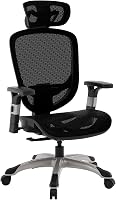
The Staples Hyken Ergonomic Mesh Task Chair is a black high-back chair with lumbar support, adjustable height, adjustable arm position, reclining resistance, an upright tilt lock and a tension knob. It measures 24 L x 27 W x 46 H in and supports up to 250 lb.
The Staples Hyken fits a workspace where you want more back and upper-body support than a stool provides. Its swivel base and carpet casters also make it better suited to moving around a desk than a fixed saddle stool.
These alternatives do not replace the main saddle-stool decision. They show when a full office chair may fit your work pattern better than stationary seating.
How do you test the fit before buying?
Test the planned setup with measurements and a short sitting check. Your feet, knees, desk edge and standing path should all work together before you commit to a fixed seat.
Use this process:
- Measure the desk or counter height.
- Mark the stool footprint on the floor with tape.
- Sit at the planned distance from the work surface.
- Check whether your feet remain supported.
- Reach for your keyboard, tools or writing area.
- Stand up without striking the desk or nearby furniture.
- Turn slightly in both directions without losing balance.
If you cannot try the stool first, use the published dimensions and measure them against a chair, box or other stable object at home. This will not reproduce the seat contour, but it can reveal whether the height and footprint are realistic.
Pay attention to the way you enter and leave the seat. A stool that feels fine once seated may still be awkward if you have to squeeze between a wall and a desk every time.
How should you set up and care for a saddle stool without wheels?
Place the stool on a level surface with enough space to approach from the front. Keep the base fully supported by the floor, and avoid positioning it across a thick rug edge, threshold or uneven transition.
Set the height before starting work. If the stool has a locking adjustment, confirm that it is secure before sitting.
Keep the area around the base free of bags, cables and footrests that could interfere with standing.
Clean the seat according to its material and the care directions supplied with the stool. Remove dust and spills promptly, especially in a shared workspace.
Avoid harsh cleaners unless the seat material is confirmed to tolerate them.
Inspect the base and adjustment points from time to time. Stop using the stool if it develops unusual rocking, a loose connection or a height mechanism that does not hold its position.
Is a saddle stool without wheels right for you?
A saddle stool without wheels is a good fit when you work mainly at one station and value a stable, compact seat. Choose a wider or more adjustable design when you need room to shift, change work surfaces or share the stool with another person.
Pick stationary saddle seating if your main needs are:
- A fixed position.
- A small footprint.
- Easy movement between sitting and standing.
- An upright work posture.
- No need to roll across the room.
Choose a full office chair if you need a backrest, arms, reclining control or frequent desk mobility. The BestOffice suits an armless mesh chair setup, while the Staples Hyken adds a high back, adjustable arms and reclining controls.
The best saddle stool no wheels choice is the one that fits your measured height, supports your preferred sitting position and leaves a clear path around the base. Start with those practical checks, then compare seat shape, adjustment and daily care.
Frequently asked questions
What is a saddle stool without wheels?
A saddle stool without wheels is stationary seating with a saddle-shaped seat and a fixed base. It stays in one place instead of rolling, which can help in work areas where you want a stable seat and do not need to move between desks, tools or stations.
How high should a saddle stool be?
Choose a seat height that lets your feet rest securely and keeps your work surface at a comfortable level. Measure the distance from the floor to the top of your work surface, then compare it with the stool's usable seat-height range rather than choosing by appearance alone.
Are saddle stools good for office work?
Saddle stools can suit office work when the height, seat shape and posture feel right for your desk. They may encourage a more open hip position, but comfort depends on your body, task and setup.
For back concerns, read our guide to are saddle chairs good for your back.
Why choose a saddle stool without wheels?
Choose a saddle stool without wheels when you want a stable seat that stays put. A fixed base can work well at a single desk, counter or workstation, especially when rolling would make you reach too far or shift position during detailed tasks.
Can a saddle stool replace an office chair?
A saddle stool can replace an office chair for some tasks, but it does not provide the same back support or reclining features as every office chair. Compare the work you do, the time you sit and the support you need before switching from a chair to a stool.