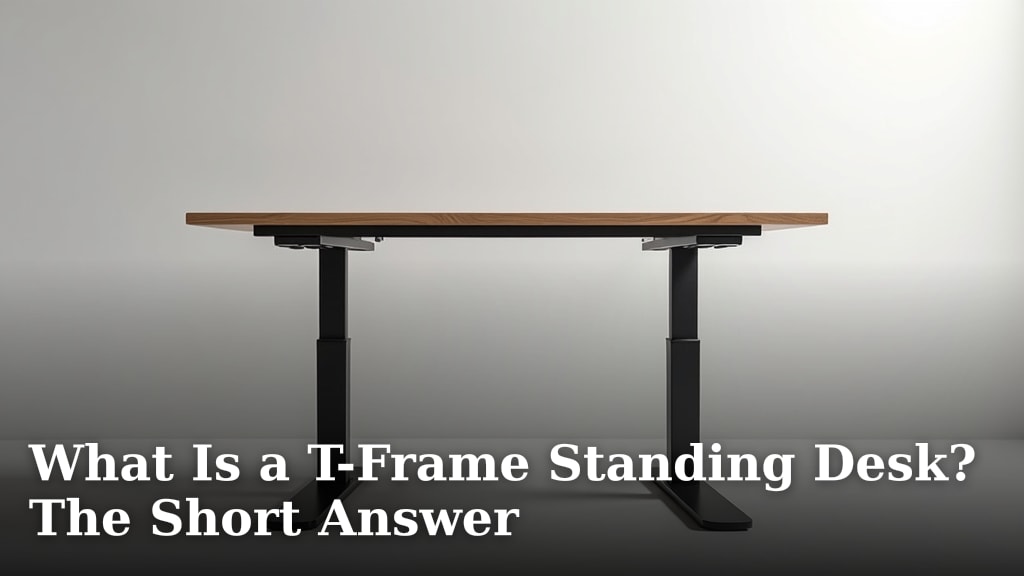
What Is a T-Frame Standing Desk? The Short Answer
A T-frame standing desk A T-frame standing desk is a common type of sit-stand workstation designed for adjustable height use. is a desk with a base that has two legs forming a wide “T” shape. This design provides a stable foundation for an adjustable height desk. It’s a common and reliable option for many.
These desks are popular because the T-shape legs offer excellent stability, even when raised to standing height. They distribute weight evenly, reducing wobbling. You’ll find them in many homes and offices for their practicality and durability.
- A T-frame desk has a base shaped like the letter “T”.
- This “T” shape helps make the desk very stable.
- It’s a common choice for adjustable height desks.
- Offers good support for your monitor and other items.
Let’s dive into the details to help you understand if a T-frame standing desk is the right choice for your workspace.
Understanding the T-Frame for Your Standing Desk
When you’re looking for an adjustable standing desk, you’ll notice different frame styles. The T-frame is one of the most popular designs. It’s named for the shape its legs make when viewed from above or the side. Think of the letter “T”.
This T-shape base provides a solid foundation for your desk. It’s designed to keep your workspace steady, whether you’re sitting or standing. Let’s break down what makes this design so common and reliable.
What Exactly Is a T-Frame Design?
A T-frame standing desk has a base with two legs that extend outward, forming a broad “T”. The lifting columns (the parts that move the desk up and down) are typically attached to the wider part of the “T” base.
This wide base is key to its stability. It spreads the weight of the desktop and anything on it across a larger area. This helps prevent the desk from tipping or wobbling, especially when you raise it to its full standing height.
The Structure Explained
Imagine a simple table. It has legs supporting the top. A T-frame desk is similar, but the legs are designed differently. Instead of four individual legs or a central pedestal, you have two main legs that form that distinctive “T” shape at the bottom.
The lifting columns usually sit in the middle, connected to the crossbar of the “T”. The feet of the “T” are the parts that rest on the floor. They are often wider than the rest of the leg structure to give you that extra support.
Why This Shape Matters for Stability
Stability is super important for a standing desk. If your desk shakes every time you type or put down a coffee mug, it’s not going to be a pleasant experience. The T-frame tackles this head-on.
The broad base of the “T” means there’s a larger footprint on your floor. This wider stance makes it harder for the desk to tip over. It distributes the load more evenly, preventing uneven stress on the legs. Many experts agree that a wider base generally leads to better stability (General Engineering Principles).
Benefits of Choosing a T-Frame Standing Desk
So, why do so many manufacturers and consumers prefer the T-frame? It boils down to a few key advantages that make it a practical choice for most users.
Excellent Stability and Support
As we’ve discussed, stability is the T-frame’s superpower. When you adjust your desk to standing height, the T-frame design ensures it remains firm and secure. You won’t have to worry about your monitor or important documents shaking.
This is especially true for desks with dual motors. These desks use two lifting columns, providing balanced power and support for the desktop. A dual-motor T-frame is a very sturdy combination.
Even Weight Distribution
The way the T-frame distributes weight is critical. The load from your desktop and everything on it is spread across both legs and the crossbar. This prevents any single point from being overloaded.
Think of it like carrying a heavy box. If you hold it from just one corner, it’s difficult. If you support it from two or more points, it’s much easier and more stable. The T-frame does this for your desk, providing a balanced load-bearing system.
Common and Widely Available
Because the T-frame is such a reliable and well-understood design, you’ll find it on a vast number of standing desks. This means you have more options when it comes to style, features, and price points.
When shopping, you’ll likely encounter many desks that use this frame style. This availability makes it easier to find a desk that fits your specific needs and budget. It’s a familiar design that many manufacturers have perfected.
Good for Various Desk Sizes
The T-frame design is versatile. It works well for both smaller compact desks and larger expansive workstations. The principle of a wide base providing stability scales well.
Whether you need a small desk for a home office corner or a large L-shaped desk for multiple monitors, a T-frame can often provide the necessary support. The longer crossbar and wider feet help manage the load effectively, regardless of the desktop dimensions.
Considering the Downsides of a T-Frame
While T-frames are excellent for stability, they aren’t without potential minor drawbacks. It’s always good to know the full picture.
Footprint on the Floor
The “T” shape, by its nature, has feet that extend outwards. This means the base will take up more floor space than, say, a single central pedestal or a very narrow leg design.
If you have very limited floor space, or if you tend to cross your legs or place your feet in a specific way under your desk, the feet of the T-frame might get in the way. Measure your available space carefully to ensure a good fit.
Aesthetics Can Vary
While functional, the T-frame design is often about utility. Some people might find the visible legs less aesthetically pleasing than a more minimalist or enclosed frame. However, many manufacturers offer T-frames in stylish finishes like black, white, or brushed metal to help them blend into your decor.
The appearance can also depend on the overall desk design. Some T-frames have very chunky legs, while others are sleeker. It’s worth looking at photos and even videos to see how the frame looks in context.

How T-Frames Compare to Other Standing Desk Bases
To really appreciate the T-frame, it helps to see how it stacks up against other common standing desk base designs. Here’s a quick comparison:
| Frame Type | Description | Pros | Cons |
|---|---|---|---|
| T-Frame | Two legs forming a wide “T” shape base. | Excellent stability, good weight distribution, widely available. | Wider floor footprint, can sometimes feel less minimalist. |
| C-Frame | A single leg that curves forward like a “C”, designed to tuck under you. | Saves floor space, allows close seating. | Can be less stable, especially at full height; limited weight capacity. |
| Four-Leg Frame | Traditional desk look with four independent legs. | Very stable, classic appearance. | Can be more complex to adjust, takes up more floor space than a T-frame. |
| Pedestal Base | A single, often large, central base. | Minimalist look, can sometimes include storage. | Can limit leg room, stability can vary greatly by design. |
As you can see, the T-frame strikes a great balance between stability and practicality for most users. The C-frame is great if you need to tuck your feet very close, but often sacrifices some stability. Four-leg frames are stable but can be bulky. Pedestal bases offer a sleek look but might not be as stable or offer as much legroom.
Key Features to Look For in a T-Frame Desk
When you’re ready to buy, keep these features in mind to make sure you get a great T-frame standing desk.
- Motor Type: Single motor desks are usually more affordable but slower and less powerful. Dual motor T-frames are faster, quieter, and offer better lifting capacity and stability.
- Weight Capacity: Ensure the desk can handle the weight of your monitor(s), computer, and any other items you plan to keep on your desk. Check the manufacturer’s specifications carefully.
- Height Range: Make sure the desk adjusts low enough for comfortable sitting and high enough for comfortable standing. This is especially important if you have specific ergonomic needs.
- Materials: Look for sturdy materials for both the frame and the desktop. Steel frames are common and durable.
- Warranty: A good warranty, especially on the motor and frame, indicates the manufacturer’s confidence in their product’s durability.
Is a T-Frame Standing Desk Right for Your Workspace?
To help you decide, ask yourself these quick questions:
- Do you need a stable desk that doesn’t wobble when raised?
- Do you plan to place multiple monitors or heavy equipment on your desk?
- Is having a wider base that extends onto the floor not an issue for your space?
- Are you looking for a reliable and common design with plenty of options?
If you answered “yes” to most of these, then a T-frame standing desk is likely an excellent choice for you. It offers that dependable stability that so many people seek in an adjustable workspace.
Conclusion
You’ve learned that a T-frame standing desk is a solid choice for creating a more dynamic workspace. Its “T” shaped base offers reliable stability and even weight distribution, making it great for supporting monitors and equipment. While it has a slightly larger floor footprint, its widespread availability and versatility for different desk sizes make it a practical pick. If you’re looking for dependable support and a common, proven design, a T-frame is likely a great fit for your needs. Take a moment to measure your space and consider your typical desk load to make your final decision.
Frequently Asked Questions
Will a T-frame standing desk wobble when I raise it?
Generally, no. The wide “T” shape of the base is specifically designed to provide excellent stability. This design helps distribute weight evenly and keeps the desk steady even at its maximum standing height. Most T-frame desks are quite firm.
Is a T-frame desk good for heavy setups like multiple monitors?
Yes, T-frame desks are well-suited for heavier setups. Their wide base and stable construction can handle the weight of multiple monitors, computers, and other office equipment without significant wobbling. Always check the desk’s specific weight capacity before loading it.
Can the T-frame legs get in the way when I’m sitting?
The feet of the T-frame extend outwards on the floor, which might occasionally interfere with your foot placement. If you have very limited space or prefer to tuck your feet close under the desk, you might find this a minor inconvenience. Measuring your legroom is a good idea.
Are T-frame standing desks harder to assemble than other types?
Assembly difficulty can vary by brand, but T-frame desks are typically straightforward to put together. They often have fewer separate parts compared to desks with four individual legs. Most instructions are designed for easy DIY setup.
Where can I find the best selection of T-frame standing desks?
You’ll find a wide variety of T-frame standing desks from many manufacturers online and in office supply stores. Because it’s such a common and popular design, many retailers offer numerous options in terms of size, features, and price. Shopping around will help you find a great match.