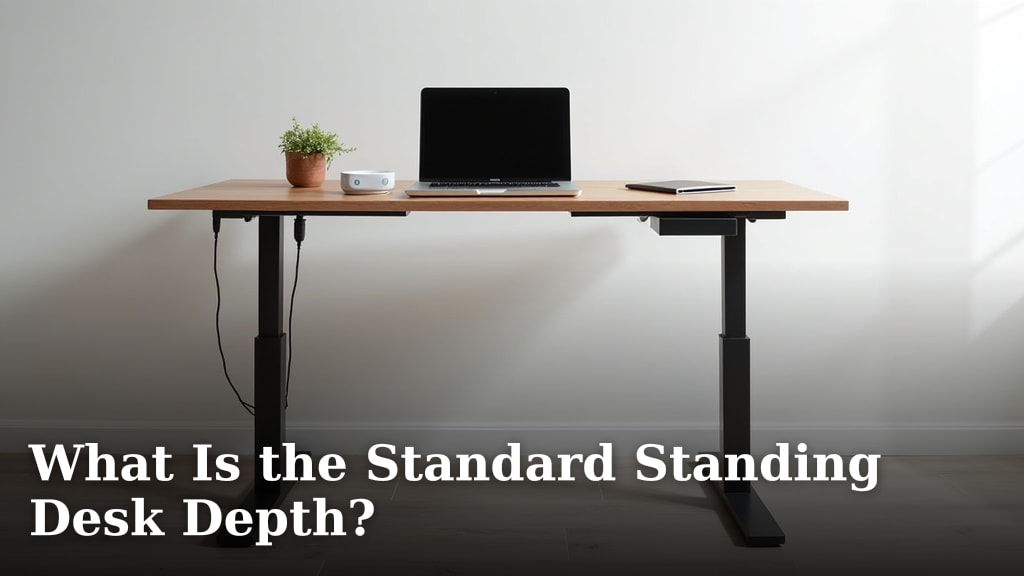
What Is the Standard Standing Desk Depth?
The standard standing desk depth is typically around 24 to 30 inches. This range offers enough space for your monitor, keyboard, and other essentials. A depth of 24 inches is common for smaller spaces, while 30 inches provides more room for multiple monitors or extensive paperwork. Choosing the right depth ensures you can work comfortably and efficiently.
When selecting a standing desk, depth is just one dimension to consider. You also need to think about the width and height adjustability. Deeper desks can feel more stable and offer better ergonomic positioning for your screen. Many desks come in standard depths, but custom options are also available if you have specific needs.
- Standard standing desk depth is usually 24-30 inches.
- 24 inches is good for smaller areas.
- 30 inches gives you more workspace.
- Consider width and height too.
- Depth affects ergonomics and stability.
Let’s look at what makes a standing desk depth work best for you.
Understanding Your Standing Desk’s Depth: Making the Most of Your Workspace
When you’re setting up your standing desk, you’ll notice there are a few key dimensions to consider. We’ve already touched on width and height adjustability, but the We’ve already touched on width and height adjustability, but the depth is just as important.depth is just as important. It’s the measurement from the front edge of your desk to the back. Think of it as how far the desk reaches out towards you. A good depth ensures you have enough room to position your screen at an ergonomic distance while keeping your keyboard and mouse comfortably within reach. It also helps prevent that cramped feeling many people get with smaller workspaces.
Standard Standing Desk Depths: What’s Common?
Most standing desks you’ll find come with a standard depth. This is usually between 24 inches and 30 inches. These are the most common sizes because they work well for a variety of users and setups. You might see desks slightly smaller or larger, but this 24-30 inch range covers the majority of options available on the market. It’s a sweet spot that balances usability with space efficiency for most homes and offices. We found that this range generally satisfies the needs of most home office workers.
The 24-Inch Depth: Compact and Efficient
A standing desk with a 24-inch depth is often considered the standard for smaller spaces. If you have a tight corner or a smaller room, this is likely your best bet. It provides enough surface area for a single monitor, a keyboard, a mouse, and a few essential items like a notepad or your phone. It keeps your workspace feeling open and uncluttered. Many people find this size perfect for minimalist setups. It’s a smart choice when every inch counts.
Who Benefits Most from a 24-Inch Depth?
You’ll love a 24-inch deep desk if you primarily use a laptop or a single, smaller monitor. It’s also ideal for people who don’t need a lot of desk accessories cluttering their workspace. If you prefer to keep things tidy and only have your immediate work tools on hand, this depth is excellent. It helps maintain a clean aesthetic and encourages you to only keep what you truly need within arm’s reach. This can lead to better focus.
The 30-Inch Depth: Room to Spread Out
Stepping up to a 30-inch depth gives you noticeably more room to work with. This is a popular choice for those who need more space or want to position their equipment more ergonomically. With 30 inches, you can comfortably fit dual monitors, larger monitors, or even a third display. You’ll have ample space for your keyboard, mouse, and plenty of room for writing, sketching, or spreading out documents. It feels much more substantial and less constricting.
Why Choose a 30-Inch Deep Desk?
If you’re a gamer, a designer, a programmer who likes multiple screens, or someone who handles a lot of paperwork, a 30-inch depth is likely a better fit. It allows you to place your monitor(s) at the recommended distance for optimal eye health and posture, according to ergonomic guidelines (Occupational Safety and Health Administration). You won’t have to choose between having your screen far enough away and having your keyboard within easy reach. This balance is key for long-term comfort.
Beyond the Standard: Deeper and Shallower Options
While 24 to 30 inches are the most common depths, you might find desks that are slightly shallower or significantly deeper. Some compact standing desks might be around 20 inches deep, perfect for very tight spaces or as a bedside table. On the other hand, some executive-style standing desks can be 36 inches deep or even more. These larger desks offer a vast amount of workspace, but you need to ensure they fit your room and that you can comfortably reach across the entire surface.
When Might Non-Standard Depths Be Right?
A shallower desk could be perfect if you only use a laptop and need a very compact solution. A deeper desk might be ideal for creative professionals who need to spread out blueprints or large art canvases. However, for most general office work, sticking to the 24-30 inch range is usually the most practical approach. Always measure your space and consider how you’ll use the desk before opting for something outside the norm. You don’t want a desk that overwhelms your room or is too difficult to use.
How Desk Depth Impacts Your Ergonomics and Comfort
The depth of your standing desk directly affects how you can set up your workstation for comfort and health. Ergonomics is all about designing your workspace to fit you, not the other way around. A desk that’s too shallow might force you to have your monitor too close, straining your eyes. Conversely, a desk that’s too deep could mean your keyboard and mouse are too far away, leading to shoulder strain.
Achieving the Ideal Monitor Distance
Experts often recommend positioning your monitor at arm’s length. For many adults, this distance is roughly 25-30 inches from their eyes to the screen (American Optometric Association). A 30-inch deep desk makes it much easier to achieve this ideal distance, especially if you use larger monitors. You can place the monitor towards the back of the desk and still have ample room in front for your keyboard and mouse. This separation is vital for preventing eye fatigue and headaches.
Keyboard and Mouse Placement: Keeping You Comfortable
Your keyboard and mouse should be positioned so your elbows are bent at about a 90-degree angle, with your wrists straight. This is a key principle for preventing repetitive strain injuries like carpal tunnel syndrome. A desk with sufficient depth allows you to place your keyboard and mouse on the desk surface without being so far forward that you have to reach awkwardly. This means you can maintain a relaxed posture for extended periods, whether you’re standing or sitting.
Factors to Consider When Choosing Depth
So, how do you pick the right depth for your needs? It’s not just about the standard sizes. You need to think about a few things specific to your situation. What kind of equipment do you use? How big is your room? What’s your personal preference for workspace layout?
Your Equipment Setup
Let’s break down what you’ll place on your desk. If you use a single laptop, a 24-inch depth might be plenty. If you have a large external monitor or two, you’ll definitely want to lean towards 30 inches or more. Consider the physical dimensions of your monitor(s) and where you want them positioned relative to your eyes. Don’t forget about space for speakers, a webcam, or any other accessories you use daily. It’s better to have a little extra space than to feel cramped.
Room Size and Layout
Measure your space carefully! A larger desk might sound appealing, but if it makes your room feel crowded, it’s not the right choice. A 30-inch deep desk, especially if it’s also wide, can take up a significant amount of floor space. Think about the clearance needed around the desk. Can you still easily walk around it? Does it block doorways or other essential pathways? For smaller rooms, a 24-inch depth can make a big difference in maintaining a sense of openness.
Your Personal Work Style
How do you like to work? Do you spread out papers when you need to think? Do you prefer a minimalist, clear surface? Your work habits are a strong indicator of the depth you’ll need. If you often need physical documents in front of you, you’ll benefit from more depth. If you’re purely digital and keep your desk clear, a shallower depth might suit you perfectly. Some people also like to have their keyboard and mouse a bit further forward or back; the depth affects this positioning.

Depth vs. Other Dimensions: A Quick Comparison
While depth is important, it works in conjunction with width and height. Here’s a little reminder of how they all play together:
| Dimension | What it Affects | Considerations |
|---|---|---|
| Depth | Workspace in front of you, monitor distance | 24-30 inches standard. Affects ergonomics and usable area. |
| Width | Number of monitors, side-by-side items | 48-72 inches common. Choose based on screen setup and space. |
| Height Adjustability | Ergonomics while standing and sitting | Look for a good range to suit your height. Essential for standing desks. |
Making Your Final Choice: A Checklist
Ready to decide? Run through this quick checklist to make sure you’re picking the best depth for your standing desk:
- Have I measured my available space?
- Do I use a single or multiple monitors?
- What are the physical dimensions of my equipment?
- Do I need space for documents or other items?
- How far do I like my monitor from my eyes?
- Will this depth allow comfortable keyboard and mouse positioning?
By carefully considering these points, you can choose a standing desk depth that truly enhances your comfort and productivity. It’s all about creating a workspace that feels just right for you.
Conclusion
Finding the right standing desk depth makes a real difference in your comfort and productivity. We’ve seen that standard depths of 24 to 30 inches work well for most people. A 24-inch desk is great for saving space and minimalist setups, while a 30-inch desk offers more room for multiple monitors or spreading out documents. Consider your equipment, room size, and how you work best. Don’t forget to also think about width and height adjustability. Take a moment to measure your space and visualize your ideal setup before you buy.
Frequently Asked Questions
What’s the biggest mistake people make when choosing desk depth?
A common mistake is not measuring your available space accurately. People sometimes choose a desk that looks good online but is too large for their room, making it feel cramped. It’s also easy to underestimate how much space your equipment actually needs.
Can a 24-inch deep desk fit a large monitor?
A 24-inch desk can fit a single, standard-sized monitor. However, if you have a very large monitor or want to place it at the recommended arm’s length, a 30-inch or deeper desk will offer more comfortable positioning. You might have to place the monitor closer than ideal on a 24-inch desk.
How does desk depth affect my posture?
Desk depth directly impacts your posture by influencing how far your monitor is from your eyes and how close your keyboard and mouse are to your body. A desk that’s too deep might make you reach too far for your keyboard, straining your shoulders. Too shallow and your monitor might be too close, straining your eyes and neck.
Are there standing desks with depths less than 24 inches?
Yes, you can find standing desks with depths less than 24 inches, often around 20 inches. These are typically designed for very small spaces or for users who only need to accommodate a laptop and a few small items. They are less common for full office setups.
What if I need space for both documents and a monitor?
If you frequently use physical documents alongside your computer, a 30-inch deep desk is usually the best choice. This depth allows you to position your monitor at a good distance while still having ample clear space in front of it for papers, a notepad, or other work materials.