What Is the Point of a Standing Desk? A Detailed Breakdown
Understanding the Main Purpose of a Standing Desk
A standing desk’s core purpose is to give you an alternative to sitting all day. It allows you to switch positions and work while on your feet. Think of it less as a replacement for your chair and more as a tool to add movement to your routine. Research has linked prolonged sitting with increased health risks, so the primary goal is to break up long sedentary periods.
Key Health and Wellness Benefits
Using a standing desk correctly can offer several benefits. These aren’t magic fixes, but they are supported by health experts as positive changes.
Reducing the Risks of Prolonged Sitting
The average office worker sits for 10 hours a day. The CDC states that sedentary jobs have increased by 83% since 1950. Standing more helps counteract this. You use more muscles and burn slightly more calories per hour than sitting. This simple change is a foundational step toward a less sedentary lifestyle.
Heart and Metabolic Health
Studies, including research published in the Journal of the American Heart Association, suggest that less sitting and more moving can contribute to better cardiovascular health. Standing engages your lower body and core, which helps with circulation and blood sugar regulation after meals.
Easing Back and Neck Discomfort
Many people report less lower back pain after switching to a sit-stand routine. A good setup promotes a more natural, neutral spine alignment compared to slouching in a chair. You might find it helps with stiff neck and shoulders caused by leaning forward at a desk all day.
Boosting Energy and Focus
Have you ever felt that afternoon slump? Standing can help you feel more alert. Changing your posture breaks physical monotony. Many users report feeling more engaged and less drowsy during tasks when they alternate between sitting and standing. It’s a physical shift that can create a mental reset.
Practical Benefits for Your Workday
Beyond health, a standing desk offers functional advantages that can make your daily tasks smoother.
Increased Flexibility and Movement
A standing desk turns your workspace into a dynamic area. You can easily step away for a quick stretch or pace while on a phone call. This built-in freedom encourages small, healthy movements that you might not take otherwise.
Improved Posture Over Time
When standing, you naturally engage your core to stay balanced. Over time, this can help strengthen the muscles that support good posture. You become more aware of how you’re holding your body, both while standing and sitting.
How to Use a Standing Desk Correctly
Owning one isn’t enough; you have to use it right to get the benefits. The golden rule is balance and variation. Don’t just stand all day—that can cause its own issues.
The Ideal Sitting-to-Standing Ratio
Most experts, including those at the Mayo Clinic, suggest starting slow. A good goal is to stand for 15-30 minutes, then sit for 30-60 minutes. Listen to your body. The objective is to alternate frequently, not to lock yourself in one position.
Starting Your Routine
In your first week, try standing for just one 15-minute block each morning. Gradually add more time as you feel comfortable. Your feet, back, and legs need time to adapt. Patience is key.
Choosing the Right Type of Standing Desk
Not all desks are the same. Your choice depends on your budget, space, and how you work.
Electric vs. Manual vs. Desktop Converters
Easiest to use are electric sit-stand desks with a motor. Manual crank desks are affordable but require effort. If you love your current desk, a desktop converter sits on top of it and can be raised or lowered. Each serves the same core purpose.
| Desk Type | Primary Benefit | Best For |
|---|---|---|
| Electric Sit-Stand | Effortless height adjustment | Frequent users, shared offices |
| Manual Crank | Budget-friendly, no power needed | Occasional use, simple setups |
| Desktop Converter | Uses your existing desk | Small spaces, renters, tight budgets |
Addressing Common Concerns
It’s normal to have questions. Let’s tackle the most common ones.
Will My Feet and Back Hurt?
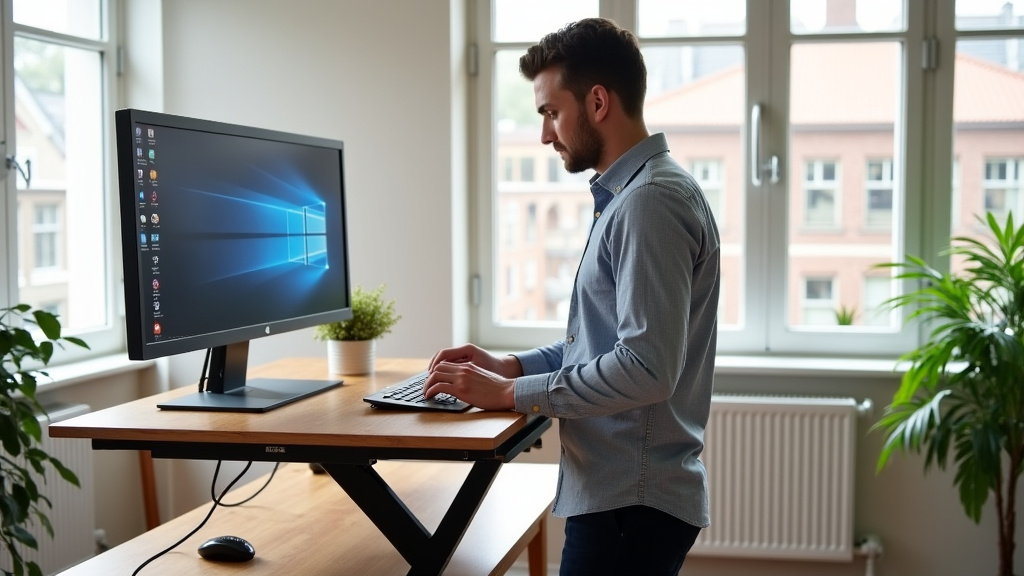
Standing incorrectly can cause fatigue. The solution is an anti-fatigue mat and proper shoes. Ensure your monitor is at eye level and your elbows are at a 90-degree angle. Start slowly and your body will adapt.
Is It Really Worth the Cost?
For many, the potential health benefits and increased energy justify the investment. Healthier employees can mean fewer sick days. It’s also a long-term investment in your personal well-being.
What to Look for When Buying
Quality matters. A wobbly desk is frustrating and unsafe. Focus on stability, a height range that fits you, and ease of use.
Making It a Habit
The biggest hurdle is remembering to switch positions. Set a timer on your phone or computer for every 30 minutes. That’s your cue to stand up or sit down. Habit stacking works well—stand when you’re reading an article, sit when you’re typing a long email.
Your Simple Setup and Use Checklist
Get started right with this quick guide.
- Adjust monitor height: The top of your screen should be at or slightly below eye level.
- Check your keyboard position: Your elbows should bend at a comfortable 90 degrees when typing.
- Start with short intervals: Begin with 15-minute standing sessions and build up.
- Wear supportive shoes: Avoid high heels or completely flat shoes for long standing periods.
- Use an anti-fatigue mat: This cushions your feet and legs on hard floors.
- Alternate and move: Shift your weight, march in place, and take walking breaks.
Final Thought on Your Work Environment
The point of a standing desk is to give you control over your workspace. It’s a practical tool to help you sit less and move more. It’s not about standing perfectly still for hours. It’s about creating a more active, flexible, and comfortable day at your desk. By starting slowly and listening to your body, you can find a rhythm that works for you.
Conclusion
So, the real point of a standing desk is simple: it’s a practical tool to help you break free from all-day sitting. By alternating between sitting and standing, you support your heart, ease back discomfort, and keep your energy levels steadier throughout the day. Remember, the goal isn’t to stand perfectly still for hours. It’s about creating a more active and flexible workspace that fits your routine. Start slowly, listen to your body, and build a rhythm that works for you. Your best next step? Set a simple timer today to remind yourself to stand or stretch every 30 minutes.
Frequently Asked Questions
Is a standing desk really better than a regular desk?
A standing desk isn’t inherently “better.” Its value comes from encouraging you to move more and sit less. Used correctly, it adds beneficial variety to your workday, which research and health experts suggest can counteract the risks of prolonged sitting.
Will standing all day be worse for my back?
Standing incorrectly or for too long without breaks can cause its own strain. The key is to alternate positions frequently and ensure your desk is at the right height. Using an anti-fatigue mat and supportive shoes also makes a big difference in comfort.
How long does it take to get used to a standing desk?
Most people adapt within a few weeks. Your feet, legs, and back need time to adjust to the new routine. Start with short 15-minute sessions and gradually increase as you feel comfortable. Be patient with your body as it learns a new habit.
Do I need a special chair if I use a standing desk?
You don’t need a special chair, but a good one matters. When you sit, your chair should support good posture. For standing, you’ll want comfortable, supportive footwear and possibly an anti-fatigue mat. The focus is on creating a balanced setup for both positions.
Can I use a standing desk in a shared office?
Yes, many people use standing desks in shared spaces. Electric sit-stand desks are often the easiest choice because they adjust quickly and quietly. Desktop converters are also a popular, less disruptive option for existing shared desks. Always consider your colleagues when adjusting your desk height.