Trackball Mouse vs Regular Mouse: Which Should You Choose? (November 2026)
Choose a trackball mouse if you want less desk movement and more control in a tight space. Choose a regular mouse for familiar movement, gaming speed or ambidextrous use.
On this page (8 sections)
- Trackball mouse vs regular mouse: what is the main difference?
- Which mouse saves more desk space?
- Which type feels easier to control?
- Which mouse is better for gaming?
- Which products fit each side of the comparison?
- How should you choose between a trackball and regular mouse?
- How do you set up and care for either mouse?
- Trackball mouse vs regular mouse: which should you choose?
Choose a trackball mouse if you want less desk movement and more control in a tight space. Choose a regular mouse for familiar movement, gaming speed or ambidextrous use.
A trackball mouse moves the cursor with a ball under your thumb or fingers while the mouse body stays still. A regular mouse moves across the desk, using the surface to control the pointer.
That simple difference shapes almost everything else in daily use. Desk space, wrist movement, hand position and the way you travel between keyboard, mouse and monitor all change with the control style.
This trackball mouse vs regular mouse comparison covers desk space, hand movement, control, gaming, wireless connections and daily work. We compared the features and stated specifications of 4 products, with scores based on how well each one fits this search.
If your work area is crowded, a stationary mouse can feel easier to live with. You do not need to keep pushing the device toward the edge of the desk and then pulling it back.
If you have room to move and prefer a familiar feel, a regular mouse can be the simpler choice. It suits people who lift, reposition and sweep without thinking about it.
Who it suits matters more than a long feature list. A right-handed office worker, a left-handed laptop user and a gamer may all need different things from the same desk.
A trackball often suits close quarters and repeated small cursor moves. It can also help when you want your hand to stay in one general area for long stretches.
A regular mouse often suits fast movement and shared or changing desks. It is easier to hand to another person, and it works naturally in either hand when the shape is ambidextrous.
Neither type is more comfortable for everyone by default. Comfort depends on hand size, grip, posture, how long you work and how much you move between tasks.
We look at specified DPI, connections, button counts and battery claims to keep the comparison grounded. Those facts affect control, setup and care in ways you will notice every day.
Use this guide to match movement style to your habits before you compare smaller details. The right mouse should fit your desk, your hands and the work you actually do.
 Best for tight desks
Nulea M501 Wireless Trackball Mouse Ergonomic Thumb
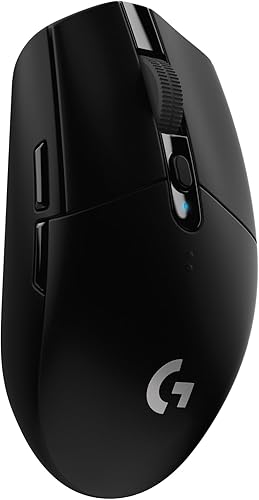 Best for gaming control
Logitech G305 Lightspeed Wireless Gaming Mouse
Trackball mouse vs regular mouse: what is the main difference?
The main difference is how the cursor moves. A trackball mouse uses stationary ball control, while a regular mouse requires you to move the whole device across the desk.
With a trackball, your hand can stay in one area while your thumb or fingers roll the ball. This can suit a crowded desk, a narrow keyboard tray or a chair-side work surface.
A conventional mouse needs a clear path. You move it forward, backward and side to side, then lift or reposition it when you reach the edge of the available space.
Neither design removes the need for good positioning. Keep your mouse close enough that your elbow can remain near your side, and adjust your keyboard and monitor so you are not reaching forward all day.
The learning curve is also different between the two styles. A regular mouse feels familiar straight away for most people, while a trackball may need a few days of practice.
For more help matching pointing devices and keyboards, see our guide to ergonomic keyboard mouse setups.
Which mouse saves more desk space?
A trackball mouse saves more usable desk space because the body stays in one place. This matters most on a narrow desk, a crowded workstation or a small keyboard tray.
The Nulea M501 uses ergonomic thumb control and is designed for narrow spaces such as crowded desks and small writing surfaces. It connects to up to 3 devices through Bluetooth or a USB dongle.
The Logitech ERGO M575S also uses thumb control. Its sculpted shape supports a stationary setup, and Logitech describes it as suitable for small or space-saving work areas.
A regular mouse can be compact without being stationary. The Logitech M185 has a compact, ambidextrous shape, but you still need a clear path to move it.
A tray can change the answer. If your keyboard and mouse surface is narrow, compare the tray's usable width and depth with the mouse movement you expect.
Our guide to an under desk keyboard tray with drawer covers the space issues that affect this setup.
Which type feels easier to control?
Regular mice feel more familiar for many users, while trackballs can reduce the amount of arm movement needed for cursor control. The better choice depends on whether you prefer moving the device or rolling a ball.
A regular mouse gives you direct movement feedback. Push the mouse right and the pointer moves right, then reposition the mouse when you run out of room.
A trackball changes the motion path. Your thumb controls the ball, and the mouse remains in position.
This may take practice if you are used to moving a conventional mouse.
The Nulea M501 has 4 DPI settings: 400, 800, 1200 and 1600. Lower settings can make small pointer movements easier to control, while higher settings reduce the amount of ball movement needed for larger cursor travel.
The ERGO M575S reaches up to 2,000 DPI and includes cursor-speed adjustment through the Logi Options Plus app. It also has quiet clicks, which may suit a shared office or a work area near other people.
Which mouse is better for gaming?
A regular gaming mouse is the stronger choice for fast games and familiar aim control. The Logitech G305 combines a conventional optical sensor, LIGHTSPEED wireless and a 1 ms report rate.
The G305 offers sensitivity up to 12,000 DPI and a stated 400 IPS precision rating. Its 3.36 oz weight and ambidextrous design support quick movement across a gaming surface.
It uses 1 AA battery and can provide up to 250 hours of continuous gameplay. Endurance mode through Logitech G HUB can extend battery life up to 9 months, according to Logitech's product information.
A trackball can still suit slower games, strategy games or general computer use if you prefer stationary control. It is less suitable if your play depends on sweeping movements that feel natural with a conventional mouse.
For more specialized options, compare our guide to the best trackball mouse for gaming before choosing a control style.
Which products fit each side of the comparison?
The Nulea M501 is the strongest fit for a tight desk, while the Logitech G305 is the strongest fit for gaming. The Logitech ERGO M575S adds a quieter ergonomic trackball option, and the Logitech M185 keeps regular mouse control simple.
Nulea M501 Wireless Trackball Mouse Ergonomic Thumb
The Nulea M501 suits a right-handed user who wants thumb control, 4 DPI levels and wireless flexibility. Its Bluetooth and USB dongle connections can link up to 3 devices, and its rechargeable battery avoids regular dry-cell battery changes.
The M501 has 6 buttons, but its buttons are not programmable. Its forward and backward buttons are not compatible with Mac OS, so Mac users should consider that limitation before choosing it.
Logitech G305 Lightspeed Wireless Gaming Mouse
The Logitech G305 fits a user who wants a regular mouse with fast wireless response and high sensitivity. Its LIGHTSPEED connection has a 1 ms report rate, and its HERO sensor supports up to 12,000 DPI.
Its ambidextrous shape can work for either hand, and its built-in nano receiver storage helps with travel. The trade-off is that it needs room to move across the desk and uses an AA battery.
Logitech Ergo M575S Wireless Bluetooth Trackball Mouse
The Logitech ERGO M575S suits a right-handed user who wants a sculpted trackball with quiet clicks. Its thumb control keeps the mouse body stationary, while Bluetooth and the included Logi Bolt receiver give you 2 connection options.
The battery lasts up to 18 months with the included AA battery. Its maximum sensitivity is 2,000 DPI, so it favors controlled everyday use over the very high sensitivity of the G305.
Logitech M185 Compact Ambidextrous 2.4 GHz Wireless
The Logitech M185 is a regular mouse for users who want a compact, familiar shape and simple USB setup. Its ambidextrous design works for either hand, and its 2.4 GHz receiver reaches up to 10 m.
If you prefer a dedicated left-handed design, compare left-handed ergonomic wireless mice.
It provides up to 12 months of battery life with the included AA battery. Its 1000 DPI maximum sensitivity is suited to ordinary pointer control, but it does not target the speed-focused needs of the G305.
How should you choose between a trackball and regular mouse?
Choose by movement style first, then check hand shape, connection and power. The best mouse is the one that fits the way you use your desk every day.
Choose a trackball if:
- Your desk or tray has limited open space.
- You want the mouse body to stay in one place.
- You prefer thumb-controlled cursor movement.
- You switch between devices and want Bluetooth or multiple wireless options.
- You want to reduce repeated arm movement during ordinary work.
Choose a regular mouse if:
- You prefer familiar movement across the desk.
- You play games that reward fast sweeping control.
- You need an ambidextrous option.
- You want simple plug-and-play USB use.
- You have enough clear surface for the mouse to travel.
A vertical trackball adds another shape to compare. Read how to choose a vertical mouse with ball if palm angle and thumb position matter as much as desk space.
Mac users should also check the connection and button details before choosing. Our guide to the best trackball mouse for Mac is the next useful comparison for that setup.
How do you set up and care for either mouse?
Place either mouse close to your keyboard, keep the connection path clear and clean the control surface when cursor movement becomes uneven. Good placement matters more than adding extra features you won't use.
For a regular mouse, leave enough clear desk area for the movement you make most often. If the mouse reaches the edge quickly, lower pointer sensitivity only if that still feels comfortable, or create more usable space.
For a trackball, keep the mouse steady and use small thumb or finger movements until the control feels natural. The Nulea M501 enters sleep mode after 30 minutes of inactivity and wakes when you click a key.
The Nulea M501's charging indicator turns blue while charging and turns off when fully charged. Use its included charging cable with a computer USB port or a 5V charger, and do not use a fast charger.
The ERGO M575S trackball can be removed from its ball cage for cleaning. Follow the care instructions for the exact mouse, and keep dust or debris from building around the ball.
Wireless receivers are easy to misplace. The Nulea M501 stores its 2.4G receiver on the bottom, while the G305 has built-in nano receiver storage.
Trackball mouse vs regular mouse: which should you choose?
Pick the Nulea M501 for a crowded right-handed desk, the Logitech G305 for gaming, the ERGO M575S for quieter thumb control or the M185 for simple ambidextrous use. Your desk space and movement preference should decide the mouse type before small feature differences.
A trackball is the better starting point when stationary control matters. A regular mouse is the better starting point when familiar movement, gaming response or left- and right-hand use matters more.
The Nulea M501 suits a right-handed user who wants thumb control in a small space. It offers 4 DPI levels, Bluetooth and USB dongle connections for up to 3 devices, and a rechargeable battery.
Its trade-offs are clear in daily use. The buttons are not programmable, and the forward and back buttons are not compatible with Mac OS, so setup choices are more limited than the button count suggests.
The Logitech G305 suits a regular mouse user who wants fast control for games. It uses LIGHTSPEED wireless with a 1 ms report rate and sensitivity up to 12,000 DPI.
It is ambidextrous and light at 3.36 oz, which helps with quick movement and travel. The cost is desk space, because it still needs room to move, plus an AA battery with up to 250 hours of continuous gameplay.
The Logitech ERGO M575S suits a right-handed user who wants relaxed thumb control and quiet clicks. It connects by Bluetooth or the included Logi Bolt receiver and claims up to 18 months of battery life with the included AA battery.
Its maximum sensitivity is 2,000 DPI, so it is aimed at controlled everyday work rather than fast gaming. The trackball can be removed from its cage for cleaning, which helps keep cursor movement smooth over time.
The Logitech M185 suits simple everyday use with an ambidextrous compact shape. It uses a 2.4 GHz USB receiver with a range of up to 10 m and up to 12 months of battery life with the included AA battery.
Its 1000 DPI maximum sensitivity fits ordinary office and laptop work, but it does not target gaming speed. You also need clear desk space, because a regular mouse must travel across the surface.
If you are building a complete workstation, pair the mouse decision with our How to Choose a Standing Desk: A Simple Guide and choose the desk height around your keyboard, mouse and monitor position.
Set the height so your shoulders stay relaxed and your elbows can work close to your body. A well-matched desk height makes any mouse style easier to use for long sessions.
Frequently asked questions
Is a trackball mouse better than a regular mouse?
A trackball mouse is better when desk space, repeated mouse movement or a stationary setup matters most. A regular mouse is better if you prefer familiar hand movement, need fast gaming control or want an ambidextrous design.
Neither shape is best for every desk or hand.
Does a trackball mouse need less desk space?
Yes. A trackball mouse keeps the main body in one place while your thumb or fingers move the ball, so it needs less open surface than a regular mouse.
You still need room for your hand, keyboard and monitor controls, but the mouse does not need a long travel path.
Are trackball mice good for gaming?
Trackball mice can work for some games, but a regular gaming mouse is usually the safer choice for fast, familiar movement. The Logitech G305 has LIGHTSPEED wireless, a 1 ms report rate and sensitivity up to 12,000 DPI, while the trackball models here focus on stationary cursor control.
Which mouse is better for a small desk?
A trackball mouse is usually better for a small desk because the cursor moves while the mouse stays in place. The Nulea M501 and Logitech ERGO M575S both use thumb control.
A regular mouse can still work if you have enough clear space for repeated movement.


